Showing posts with label Japanese noodles. Show all posts

Thursday, January 15, 2026

A Taste of Japanese New Year Traditions (2026 Edition)

      New Year’s holidays — oshōgatsu (お正月) — are the most important celebration in Japan. Every year, my husband and I enjoy preparing traditional dishes that welcome good fortune and mark the beginning of a fresh year. Here is what we ate during this year’s New Year’s holidays.


New Year’s Eve: Toshikoshi Soba (年越しそば)

In Japan, people do ōsōji (大掃除), a big year‑end cleaning, before welcoming the New Year. After finishing our cleaning, our final meal of the year was toshikoshi soba, a tradition meant to “cut off” the hardships of the past year.

Toshikoshi Soba (年越しそば) 

      This time, my husband cooked soba noodles and finished them with tempura shrimp, soft tororo kombu, fresh green onions, crunchy tenkasu, and a little yuzu kosho for a bright, spicy kick.


Traditional Japanese Foods for New Year (おせち料理)

Japanese New Year (Shōgatsu) is celebrated from January 1 to January 3, known as sanganichi (三が日). Families gather, visit shrines, and enjoy special dishes called osechi ryōri (おせち料理), each food carrying a symbolic meaning for health, prosperity, and happiness.

My husband and I spent New Year’s Eve preparing our osechi dishes together.

Osechi Ryōri (おせち料理)


Ozoni (お雑煮), Mochi Soup

Mochi is essential during the New Year. Many families enjoy ozoni, a warm mochi soup that varies by region. 

Ozoni (お雑煮)

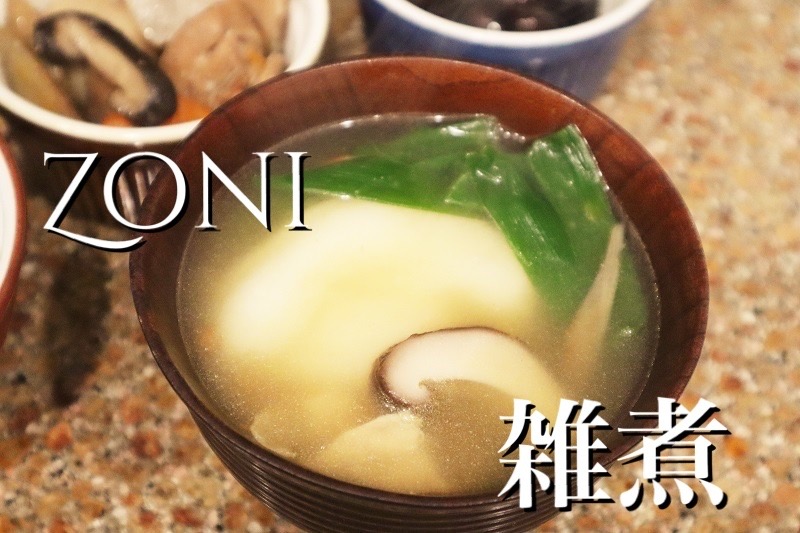
       This year, my husband made chicken and shrimp ozoni with handmade mochi we received from my friend before New Year’s Eve. The tender mochi melting into the savory broth felt especially comforting on a cold New Year morning.


Chikuzenni (筑前煮), Simmered Chicken and Vegetables

Chikuzenni is a classic New Year dish from Fukuoka, and each ingredient carries a special wish for the year ahead. 

Chikuzenni (筑前煮)

This year, I made mine with satoimo, carrot, gobo, konjac, chicken, shiitake mushrooms, and lotus root.

  • Lotus root (れんこん) → Its holes symbolize “seeing ahead,” wishing for a clear, hopeful future. Because it has many seeds, it also represents prosperity and the growth of future generations.

  • Carrot (にんじん) → Symbolizes good fortune and rising luck. Its bright red color adds a celebratory, auspicious touch.

  • Chicken → A symbol of good fortune and prosperity.

  • Satoimo (里芋) → Represents family prosperity, as many small taro grow from one parent taro.

  • Gobo (ごぼう) → With long, deep roots, it symbolizes stability, strong foundations, and long life.

  • Konjac (こんにゃく) → Associated with good relationships, harmony, and strong family bonds.

  • Shiitake mushrooms (しいたけ) → Symbolize longevity and good health.


If you want to try making it, you can check out my previous recipe: How to Cook Chikuzenni, Japanese Simmered Chicken and Vegetables.


Datemaki (伊達巻), Sweet Rolled Omelet

Datemaki is a sweet, fluffy rolled omelet made with eggs and fish paste (hanpen). Its scroll‑like shape symbolizes knowledge and learning. 

Datemaki (伊達巻)

I made datemaki again this year — soft, sweet, and one of my favorite osechi dishes. It’s also surprisingly easy to make with hanpen, eggs, soy sauce, mirin, and sugar. If you want to try making it, you can check out my previous recipe: How to Cook Datemaki: Perfect for New Year's


Kuromame (黒豆), Sweetened Black Soybeans

     Kuromame represent diligence and good health, carrying the wish to stay hardworking and healthy throughout the year.

Kuromame (黒豆)

I cooked kuromame again this year, letting the beans simmer slowly until they became glossy and tender. You can see my recipe here: How to Cook Kuromame for Osechi.


Simmered Shrimp, Ebi no Umani (海老のうま煮)

Shrimps and Prawns are called ebi (海老, えび, エビ) in Japanese, and they symbolize longevity—their curved shape resembles the bent back of a long‑lived elder. 

Ebi no Umani (海老のうま煮)

On New Year’s Eve, we went to Costco to buy fresh shrimps for our osechi. This was my second time making Ebi no Umani, and it turned out so good. I’ll share the recipe in a future post.


Grilled Cheese Mayonnaise Shrimp (海老マヨチーズ焼き)

We also made grilled cheese mayonnaise shrimp this year, one of our favorite osechi dishes. It’s rich, savory, and so easy to prepare. You can find the recipe in my previous post, How to Cook Grilled Cheese Mayonnaise Shrimp for Your Osechi Meal.

Grilled Cheese Mayonnaise Shrimp (海老マヨチーズ焼き)


     This time, we enjoyed Mitake (三岳), a shochu we brought back from Yakushima Island in 2024. Shochu is a traditional Japanese distilled spirit made from ingredients such as sweet potatoes, barley, or rice. In Japan, people traditionally drink a small amount of otoso (おとそ)—a mixture of alcohol, mirin, and herbs—during the New Year holidays for good luck. Mitake isn’t considered otoso, but we still enjoyed it as part of our New Year’s good‑luck tradition.

Mitake (三岳)


      These are also my entries you might like. 

■ How to Cook Goya Chanpuru, Stir-fried Bitter Melon with Eggs

■How to Cook Best Chicken Teriyaki 

■How to Cook Quick and Easy Fluffy Mushroom Omelettes

■ICHIRAN Instant Ramen - The Best Instant Ramen from Popular Japanese Ramen Restaurant (How We Cooked!)  

  ■All About Marutai Kyushu Local Ramen! Must-Try Japanese Instant Ramen


■Myojo Chukazanmai Ryanmen - The Best Hiyashi Chuka Instant Noodles

■Top 3 My Favorite Ramen From Marutai Kyushu Ramen Series

■How to Cook Yakisoba with Instant Noodles, Sapporo Ichiban Chow Mein 

■How to Cook Omurice, a Japanese Omelette Stuffed with Rice (Cook Like a Pro!) 

■How to Make An Easy Egg Toast (Japanese Sliced Bread + Japanese Mayonnaise = Deliciousness)
   
■Don Quijote (Donki) Haul - What He Got in Japan 

■What He Got at Drugstore in Japan - Haul 

■Top 10 Products You Should Buy at Japanese Supermarkets (for Beginners!)

■My Top 15 Must Eat Foods in Japan - My Favorite Japanese Foods

■How to Make Japanese Deep Fried Chicken, Kara-Age

■How to Cook Miso Soup

■8 Interesting Japanese Kitchen Gadgets! 


    My entries related to cooking can be seen here.


    My entries related to my favorite recipes can be seen here.

    My entries related to foods my husband cooked can be seen here.

    My entries related to Japanese noodles can be seen here.

    My entries related to Japan Haul can be seen here.
 

    My entries related to Best Japanese Beauty Products can be seen here.

    My entries related to Japan can be seen here


    ★You can find my recipe entries through my Pinterest


Thursday, January 9, 2025

Traditional Japanese Foods I Ate During This New Year's Holidays

      New Year's holidays, known as oshogatsu (お正月) in Japanese, are the most important holidays for Japanese people. Today, I'm going to share with you what I ate during this year's New Year's holidays.


Traditional Japanese Food for New Year's Eve

     In Japan, it is traditional to do osoji (大掃除), a big cleaning, in late December before the New Year arrives. Indeed, my husband and I completed our osoji in late December. The last meal before the New Year was toshikoshi soba. It is a Japanese tradition to eat soba noodles, known as toshikoshi soba (年越しそば, 年越し蕎麦).

 Toshikoshi Soba (年越し蕎麦)

      This time, my husband cooked soba noodles with tempura shrimp. We bought our favorite frozen tempura shrimp from Costco and added yuzu kosho, a spicy Japanese condiment made from yuzu citrus peel, chili peppers, and salt.


Traditional Japanese Foods for New Year

        Japanese New Year (Shogatsu) runs from January 1 through January 7 (O-shogatsu, 大正月) or January 15 (Ko-shogatsu, 小正月). Specifically, January 1 through January 3 is called sanganichi (三が日). During this time, people visit shrines, meet with family and relatives for the first time in the year, and enjoy traditional Japanese New Year's foods.


Osechi (おせち料理)

        During the New Year's holiday, people in Japan eat Osechi (おせち) or Osechi Ryori (おせち料理). Osechi is a collection of auspicious foods such as chikuzenni, kuromame, kamaboko, and more.

     On New Year's Eve, we spent the entire day preparing these Osechi dishes for the coming New Year.


Zoni (雑煮), Mochi Soup

       During the New Year's holiday, it is a Japanese tradition to eat mochi. Specifically, mochi soup, called zoni (雑煮) or ozoni (お雑煮), is commonly enjoyed in Japan during this festive season.

 
       This time, my husband made chicken zoni. We bought kiri mochi at Japanese supermarket before the New Year's holidays. You can also purchase Japanese mochi on Amazon.


 Chikuzenni (筑前煮), Nishime (煮しめ)

      Chikuzenni is considered a lucky food for New Year's Day because it includes a variety of ingredients, each with symbolic meanings. For example, lotus root represents a clear future, carrots are cut into flower shapes to symbolize growth, and chicken is believed to bring good fortune. The combination of these ingredients in chikuzenni is thought to bring prosperity and happiness for the coming year.

          I cooked chikuzenni as part of our Osechi. I used various vegetables, konjac, and chicken. If you're interested in how to cook chikuzenni, you can check out my previous entry, How to Cook Chikuzenni, Japanese Simmered Chicken and Vegetables.


 Grilled Cheese Mayonnaise Shrimp (海老マヨチーズ焼き)

     Prawn and shrimp are called ebi in Japanese. Ebi symbolizes a wish for a long life because of their appearance. When you are very old, you might have a bent waist, similar to the curve of a prawn or shrimp.


Kuromame (黒豆), Sweetened Japanese Black Beans

       Kuromame (黒豆) are black soybeans, and "mame" symbolizes working diligently and healthily.

 
        Just like the previous year, I cooked kuromame again. You can check out my previous entry, How to Cook Kuromame for Osechi, Traditional Japanese Foods for New Year Holiday.


Datemaki (伊達巻)
     Datemaki (伊達巻) is a sweet rolled omelet mixed with fish paste or hanpen, creating a fluffy texture and sweet flavor. It is considered a New Year's lucky food because its rolled shape resembles scrolls, symbolizing cultural knowledge and wisdom for the coming year.


        I made datemaki for the first time, using eggs and hanpen. I will write about how to cook datemaki in a future entry.


Sweetened Chestnut Paste (マロンクリーム)

 Chestnuts are considered a lucky food because they symbolize success and victory, bringing good fortune for the upcoming year.

      People usually cook kurikinton (栗きんとん) for New Year's Day. However, since Japanese sweet potatoes were quite expensive, my husband decided to make sweetened chestnut paste instead. Sweetened chestnut paste (マロンクリーム) is a smooth and sweet spread made from chestnuts, often enjoyed during New Year's celebrations.


 Happy New Year's Holidays!


       These are also my entries you might like.

Top 15 Popular Posts from Best Japanese Beauty Products   

Top 15 Popular Posts from Best Japanese Beauty Products

5 Most Popular Japanese Sunscreens Can Be Purchased at Drugstores in Japan

16 Best Japanese Beauty Products I Purchased in Japan - Drugstore, Discount Store, Daiso and Amazon Japan

3 Best Japanese Sunscreens with SPF50+ PA++++

3 Best Japanese Sunscreens Won Beauty Award This Year

Top 3 Japanese Powder Sunscreens   

3 Best Japanese Sunscreen Products to Try This Summer

3 Best Japanese Eye Creams Won Beauty Award This Year

3 Best Facial Sheet Masks Loved in Japan This Year

7 Most Popular Japanese Facial Cleansing Wipes for Removing Makeup  


7 Best Japanese Beauty Products Hall of Fame  

Top 5 Life-Changing Japanese Beauty Products   

Top 5 Most Popular Japanese Charcoal Soap

5 Best Japanese Facial Lotion (Toner), Kesyou-sui

The Most Popular Facial Sheet Masks in Japan

4 Reasons Why I Love Kose Softymo Cleansing Oil

10 Best Japanese Beauty Products on Amazon Japan, You Can Also Purchase Them at Drugstores in Japan 


     My entries related to Best Japanese Beauty Products can be seen here.
 

     My entries related to Japan can be seen here.

     My entries related to beauty can be seen here.

     My entries related to Japan Haul can be seen here.

     You can find my beauty entries by categories from here.


Thursday, January 4, 2024

What I Ate Traditional Japanese Foods for This New Year's Holidays

            New Year's holidays, which are called oshogatsu (お正月) in Japanese, are the most important holidays for Japanese people. Today, I'm going to share with you what I ate this New Year's holidays.


Traditional Japanese Food for New Year's Eve

         It's a Japanese traditional that osoji (大掃除), big cleaning, is done in late December before the New Year comes. Indeed, my husband and I did osoji late December. The last meal before the New Year came was toshikoshi soba.  It's a Japanese traditional to eat soba noodles, which are called toshikoshi soba (年越しそば, 年越し蕎麦). 


 Toshikoshi Soba (年越し蕎麦)

      This time, my husband cooked soba noodles with prawn tempura. We purchased our favorite frozen prawn tempura at Costco.  


 Traditional Japanese Foods for New Year

       Japanese New Year (Shogatsu) runs January 1 through January 7 (O-shogatsu, 大正月) or January 15 (Ko-shogatsu, 小正月). Specially, January 1 through January 3 is called sanganichi (三が日), and people visit shrines and meet families and relatives for the first time in the year and enjoy Japanese traditional New Year's foods.


Osechi (おせち料理)

During New Year's holiday, people in Japan eat Osechi (おせち), Osechi Ryori (おせち料理). Osechi is a collection of lucky foods such as chikuzenni, kuromame, kamaboko and so on.

     On New Year's Eve, we cooked these Osechi dishes all day long for coming New Year.


Zoni (雑煮), Mochi Soup
       During New Year's holiday, it's a Japanese traditional to eat mochi. Specially, mochi soup which is called zoni (雑煮) or ozoni (お雑煮) is commonly eaten in Japan during New Year's holiday.   

       This time, my husband cooked this chicken zoni. We were glad that our Japanese friend gave us this homemade mochi before New Year's holidays. You can also purchase Japanese mochi on Amazon.


 Chikuzenni (筑前煮), Nishime (煮しめ)

      I cooked this chikuzenni as our Osechi. I used some vegetable, konjack and chicken. If you are interested in how to cook chikuzenni, you can check out my previous entry, How to Cook Chikuzenni, Japanese Simmered Chicken and Vegetables.


 Simmered Prawn, Ebi No Umani (海老のうま煮)

     Prawn and shrimp are called Ebi in Japanese. Ebi symbolizes a wish for a long-life because of the appearance. When you are very old, you will probably have a bend waist. 

     On New Year's Eve, we went to Costco to purchase fresh prawns for Osechi. It was my first time to cook this simmered prawn and it turned out so good. :)


 Grilled Cheese Mayonnaise Prawns (海老マヨチーズ焼き)

       Because we purchased a lot of fresh prawns at Costco, I decided to cook grilled cheese mayonnaise prawns. These were so tasty! I told my husband that these tasted like ones we had during a wedding party. I would like to cook these again some day!


 Kazunoko (数の子, かずのこ), Herring Roe

      Kazunoko (かずのこ) is herring roe. Kazu (数, かず) means number and Ko (子) means child, so Kazunoko symbolizes a lot of children and a large family.

       My coworker gave me this kazunoko for New Year's food. When I was a child in Japan, boxes of kazunoko were in our refrigerator during New Year's holidays. However, it was my first time to prepare kazunoko for osechi. I didn't know that it took so many hours to prepare before I could enjoy it. Anyway, I was glad that I had a chance to eat Japanese kazunoko in the U.S. on New Year's holidays. (Kazunoko is so expensive in the U.S.)


Kuromame (黒豆), Sweetened Japanese Black Beans 

      Kuromame (黒豆) is black soy beans, and mame symbolizes working diligently and healthily.

      Just like the previous year, I cooked kuromame again. You can check out my previous entry, How to Cook Kuromame for Osechi, Traditional Japanese Foods for New Year Holiday.


It's not a traditional Japanese New Year's food, but my husband made a lot of taiyaki on New Year's Eve! 

      It's because tai (鯛) is a lucky fish! Tai (鯛, たい) means a red snapper, sea bream, in Japanese. People in Japan eat a broiled red snapper on happy events such as on a wedding day, baby's 100th day, New Year's day and etc. Auspicious is called medetai (めでたい) in Japanese. "Tai ha medetai (鯛はめでたい)" means tai is a good luck fish. That's why taiyaki is a kind of a good luck fish-shaped cake and can be eaten all year round.

       Because my husband cooked anko (あんこ), sweetened red bean paste, to eat with mochi for New Year's holidays, he also cooked taiyaki (たい焼き), Japanese fish-shaped cake filled with sweetened red bean pastes. You can also check my previous entries, How to Make Perfect Anko, Japanese Sweetened Red Bean Paste, and , How to Make Perfect Taiyaki, Japanese Fish-Shaped Cake.


 Happy New Year's Holidays!


       These are also my entries you might like.

Top 15 Popular Posts from Best Japanese Beauty Products   

Top 15 Popular Posts from Best Japanese Beauty Products

5 Most Popular Japanese Sunscreens Can Be Purchased at Drugstores in Japan

16 Best Japanese Beauty Products I Purchased in Japan - Drugstore, Discount Store, Daiso and Amazon Japan

3 Best Japanese Sunscreens with SPF50+ PA++++

3 Best Japanese Sunscreens Won Beauty Award This Year

Top 3 Japanese Powder Sunscreens  

3 Best Japanese Sunscreen Products to Try This Summer

3 Best Japanese Eye Creams Won Beauty Award This Year

3 Best Facial Sheet Masks Loved in Japan This Year

7 Most Popular Japanese Facial Cleansing Wipes for Removing Makeup  


7 Best Japanese Beauty Products Hall of Fame 

Top 5 Life-Changing Japanese Beauty Products  

Top 5 Most Popular Japanese Charcoal Soap

5 Best Japanese Facial Lotion (Toner), Kesyou-sui

The Most Popular Facial Sheet Masks in Japan

4 Reasons Why I Love Kose Softymo Cleansing Oil

10 Best Japanese Beauty Products on Amazon Japan, You Can Also Purchase Them at Drugstores in Japan


     My entries related to Best Japanese Beauty Products can be seen here.
 

     My entries related to Japan can be seen here.

     My entries related to beauty can be seen here.

     My entries related to Japan Haul can be seen here.

     You can find my beauty entries by categories from here.


Monday, January 2, 2023

What I Ate Traditional Japanese Foods for This New Year's Holidays and Our New Year's Day Hike

           New Year's holidays, which are called oshogatsu (お正月) in Japanese, are the most important holidays for Japanese people. Today, I'm going to share with you what I ate this New Year's holidays.


Traditional Japanese Food for New Year's Eve

         It's a Japanese traditional that osoji (大掃除), big cleaning, is done in late December before the New Year comes. Indeed, my husband and I did osoji all day long on New Year's Eve. The last meal before the New Year came was toshikoshi soba.  It's a Japanese traditional to eat soba noodles, which are called toshikoshi soba (年越しそば, 年越し蕎麦). 

Toshikoshi Soba (年越し蕎麦)

Toshikoshi Soba

      This time, my husband cooked chicken soba noodles. He topped soba noodles with Tyson Grilled & Ready Fully Cooked Southwest Grilled Chicken Breast Strips because it's easier. Dried soba noodles were one we purchased in Japan about a month ago. 😉


 Traditional Japanese Foods for New Year

       Japanese New Year (Shogatsu) runs January 1 through January 7 (O-shogatsu, 大正月) or January 15 (Ko-shogatsu, 小正月). Specially, January 1 through January 3 is called sanganichi (三が日), and people visit shrines and meet families and relatives for the first time in the year and enjoy Japanese traditional New Year's foods.


Osechi (おせち料理)

During New Year's holiday, people in Japan eat Osechi (おせち), Osechi Ryori (おせち料理). Osechi is a collection of lucky foods such as chikuzenni, kuromame, kamaboko and so on.

Osechi


Zoni (雑煮), Mochi Soup
       During New Year's holiday, it's a Japanese traditional to eat mochi. Specially, mochi soup which is called zoni (雑煮) or ozoni (お雑煮) is commonly eaten in Japan during New Year's holiday.   

Zoni
       This year, my husband cooked this zoni for New Year's soup. If you are interested in how to cook zoni, you can check out my previous entry, How to Cook Zoni, Japanese Mochi Soup for New Year's Day.


 Chikuzenni (筑前煮), Nishime (煮しめ)

Chikuzenni
       I cooked this chikuzenni as our Osechi. I used some vegetable, konjack and chicken. If you are interested in how to cook chikuzenni, you can check out my previous entry, How to Cook Chikuzenni, Japanese Simmered Chicken and Vegetables.


Kuromame (黒豆), Sweetened Japanese Black Beans

Kuromame
       I cooked this kuromame (黒豆), sweetened black beans, as our Osechi for my first time. I thought that it would be difficult, but it was easier than I expected. However, it took about four hours. I will write about kuromame recipe in my future entry.


It's not a traditional Japanese New Year's food, but I made a lot of taiyaki on January 1st! 

      It's because tai (鯛) is a lucky fish! Tai (鯛, たい) means a red snapper, sea bream, in Japanese. People in Japan eat a broiled red snapper on happy events such as on a wedding day, baby's 100th day, New Year's day and etc. Auspicious is called medetai (めでたい) in Japanese. "Tai ha medetai (鯛はめでたい)" means tai is a good luck fish. That's why taiyaki is a kind of a good luck fish-shaped cake and can be eaten all year round.

Taiyaki

        A traditional taiyaki has sweetened azuki bean pastes. If you are interested in how to make taiyaki, you can check out my previous entry, How to Make Perfect Taiyaki, Japanese Fish-Shaped Cake . 


Our New Year's Day Hike!

San Gabriel River Bike Trail

       It was raining on New Year's Eve all day long. It finally stopped raining in the early morning on January 1st. That's why we decided to hike in Orange County. We finally chose San Gabriel River trail for our first hike of 2023 because we hoped that we could see sea turtles in the river. Because of after storm, it was very windy and cold, and we were not able to find sea turtles this time unlike our previous hike. You can also check out my previous entry, Green Sea Turtles in San Gabriel River - Seal Beach / Long Beach .

San Gabriel River Bike Trail

      However, we were able to see beautiful rainbows twice on January 1st! How lucky we were!

San Gabriel River Bike Trail

     I thought that 2023 will be a great year! 


       These are also my entries you might like.

My Shopping List for Japanese Beauty Products - What I Want to Get in Japan

Top 15 Popular Posts from Best Japanese Beauty Products

5 Most Popular Japanese Sunscreens Can Be Purchased at Drugstores in Japan

16 Best Japanese Beauty Products I Purchased in Japan - Drugstore, Discount Store, Daiso and Amazon Japan

3 Best Japanese Sunscreens with SPF50+ PA++++

3 Best Japanese Sunscreens Won Beauty Award This Year

Top 3 Japanese Powder Sunscreens  

3 Best Japanese Sunscreen Products to Try This Summer

3 Best Japanese Eye Creams Won Beauty Award This Year

3 Best Facial Sheet Masks Loved in Japan This Year

7 Most Popular Japanese Facial Cleansing Wipes for Removing Makeup  


7 Best Japanese Beauty Products Hall of Fame 

Top 5 Life-Changing Japanese Beauty Products  

Top 5 Most Popular Japanese Charcoal Soap

5 Best Japanese Facial Lotion (Toner), Kesyou-sui

The Most Popular Facial Sheet Masks in Japan

4 Reasons Why I Love Kose Softymo Cleansing Oil

10 Best Japanese Beauty Products on Amazon Japan, You Can Also Purchase Them at Drugstores in Japan


     My entries related to Best Japanese Beauty Products can be seen here.
 

     My entries related to Japan can be seen here.

     My entries related to beauty can be seen here.

     My entries related to Japan Haul can be seen here.

     You can find my beauty entries by categories from here.


Thursday, November 3, 2022

How to Make Udon Noodle from Scratch


How to Make Udon Noodle from Scratch

      When I was a child, I made udon noodles from scratch at home once, and I remembered that it was really fun to make and it turned out to be the best udon noodles I've ever had. In Japan, udon noodles are very affordable. If you go to supermarkets in Japan, you might find raw udon noodles for around $0.13 (20 yen) per serving. Considering that it's very cheap price, making udon noodles from scratch won't save your money and time at all. However, these years flour price has hiked significantly in the U.S., and udon noodle price has also hiked. I used to purchase frozen udon noodles for $1.99 for 5 servings on sale at Asian grocery stores in the U.S., but now it's $4.99 on sale or $7.99 at regular price. That's why I thought that it's good time to make udon noodles from scratch. I was really excited to make it because I always wanted to make it for so many years! Last month, my husband and I finally decided to make udon noodles.

       The noodles we made were not perfect shape, but it tasted very good. We made a large amount of noodles, so we kept many of them in freezer to enjoy them later. For our first udon noodles, we enjoyed tsukimi udon (月見うどん). You can check out my previous entry, How To Cook Tsukimi Wakame Udon.


       Before making udon noodles from scratch, I watched this video. You will see that noodles is made of simple ingredients.


        Today, I'm going to share how we made udon noodles from scratch. 😉


How to Make Udon Noodles from Scratch

Ingredients (8 to 16 Servings)

2 Tablespoons of Salt

400ml of Water

800g of All-Purpose Flour


1. Mix salt and water. Stir until salt is completely dissolved in water. (I use pink salt, Himalayan salt, but you can also use sea salt. )


2.  Put flour in a large bowl and add 300ml of salted water. Then stir it with a spoon or your hand.


     Add 100ml of salted water little by little. Stir thoroughly until the flour is evenly hydrated.


3. Knead the dough together into a ball.


4. Put the dough into a large Ziploc bag.


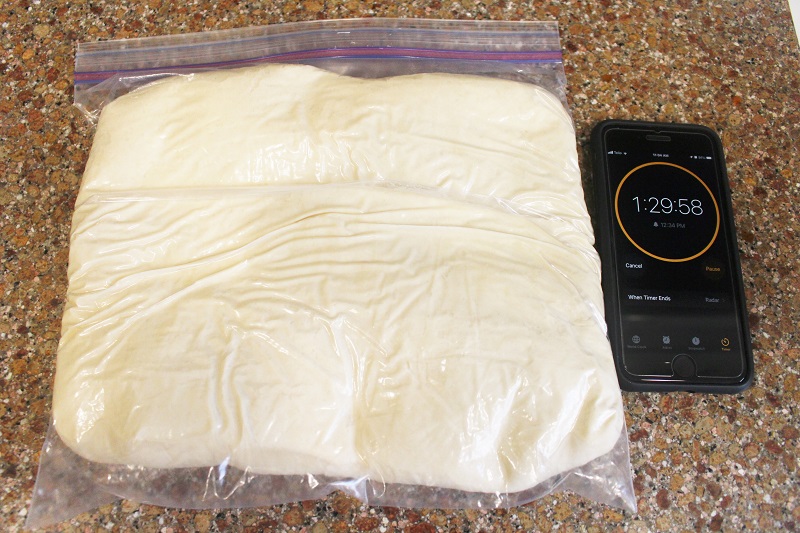
5. Knead the dough with your hands for 20 minutes or with your feet for 5 to 10 minutes.

     It's easier to knead the dough with your feet than your hands. Step on the dough until it's flat. Then, fold the edges toward the middle. Then step on it to flatten it again. Repeat it for 5 to 10 minutes.


6. Let the dough rest at room temperature for one to two hours. (1 hour in summer / 2 hours in winter) 


7. Dust the work surface with all-purpose flour. Put the dough and sprinkle flour over the dough as well.


8. Roll out the dough with using a large rolling pin.


     The dough is about 3mm, 1/8 of an inch, thick.


9. Dust the dough with flour and fold it a few times.


10. Dust the cutting board with flour, and transfer the dough to it. Then, slice the folded dough into 5mm thickness. 

Dust the noodles with flour to prevent them from sticking to each other.

     Divide the noodles into 8 to 16 servings. One serving is about 80g to 150g. 


If You Want to Enjoy Them Later, Store Them in A Freezer.

Because I made a large amount of noodles, I stored many of them in the freezer. Just put each serving of noodles into a plastic sandwich bag, and put them in the freezer.


Cook the Noodles

1. Fill the large pot with plenty of water and bring it to a boil. Then, cook the noodles in a boiling water for 10 to 15 minutes.


2. Drain and rinse thoroughly under cold running water. Now, noodles are ready.


3. For 2 servings of udon noodles, put 400ml of water, 120ml of mentsuyu into a pot, and bring it to a boil. Add cooked noodles and cook it for 30 seconds. 


4. Serve them in udon bowls.

     Top with green onions, tenkasu, cooked eggs and yuzu kosho.


5. Enjoy!


      These are also my entries you might like.

■How to Cook Best Chicken Teriyaki

■How To Make Tori Nanban Soba, Chicken and Green Onion Soba Noodles

■ICHIRAN Instant Ramen - The Best Instant Ramen from Popular Japanese Ramen Restaurant (How We Cooked!)  

■All About Marutai Kyushu Local Ramen! Must-Try Japanese Instant Ramen

■Myojo Chukazanmai Ryanmen - The Best Hiyashi Chuka Instant Noodles

■Top 3 My Favorite Ramen From Marutai Kyushu Ramen Series

■How to Cook Yakisoba with Instant Noodles, Sapporo Ichiban Chow Mein 

■How to Cook Omurice, a Japanese Omelette Stuffed with Rice (Cook Like a Pro!)

■How to Make An Easy Egg Toast (Japanese Sliced Bread + Japanese Mayonnaise = Deliciousness)
  
■Don Quijote (Donki) Haul - What He Got in Japan

■What He Got at Drugstore in Japan - Haul

■Top 10 Products You Should Buy at Japanese Supermarkets (for Beginners!)

■My Top 15 Must Eat Foods in Japan - My Favorite Japanese Foods

■How to Make Japanese Deep Fried Chicken, Kara-Age

■How to Cook Miso Soup

■8 Interesting Japanese Kitchen Gadgets!


    My entries related to cooking can be seen here.

    My entries related to my favorite recipes can be seen here.

    My entries related to foods my husband cooked can be seen here.

    My entries related to Japanese noodles can be seen here.

    My entries related to Japan Haul can be seen here.
 

    My entries related to Best Japanese Beauty Products can be seen here.

    My entries related to Japan can be seen here


    ★You can find my recipe entries through my Pinterest.